
Resources
17 September 2026 · 4 min read
Import VAT for e-commerce in the EU: the simple guide
A parcel entering the EU from a non-EU country is subject to import VAT, on top of any customs duties. The rules differ depending on the value of the goods and on who imports them: the seller or the end customer. Here is how to make sense of it.
Understanding import VAT for online sales
Since 1 July 2021, all goods imported into the European Union from a non-EU country are subject to VAT, whatever their value. The former exemption for low-value consignments (under €22) was abolished as part of the EU’s e-commerce VAT reform. This change has two direct consequences for an online retailer that imports: every parcel, even an item worth a few euros, now counts towards import VAT; and the choice of collection scheme (at the point of sale or at the point of import) becomes a genuine operational decision.
The rules by origin and destination of the goods
Two very different situations lie behind the term ‘import VAT’:
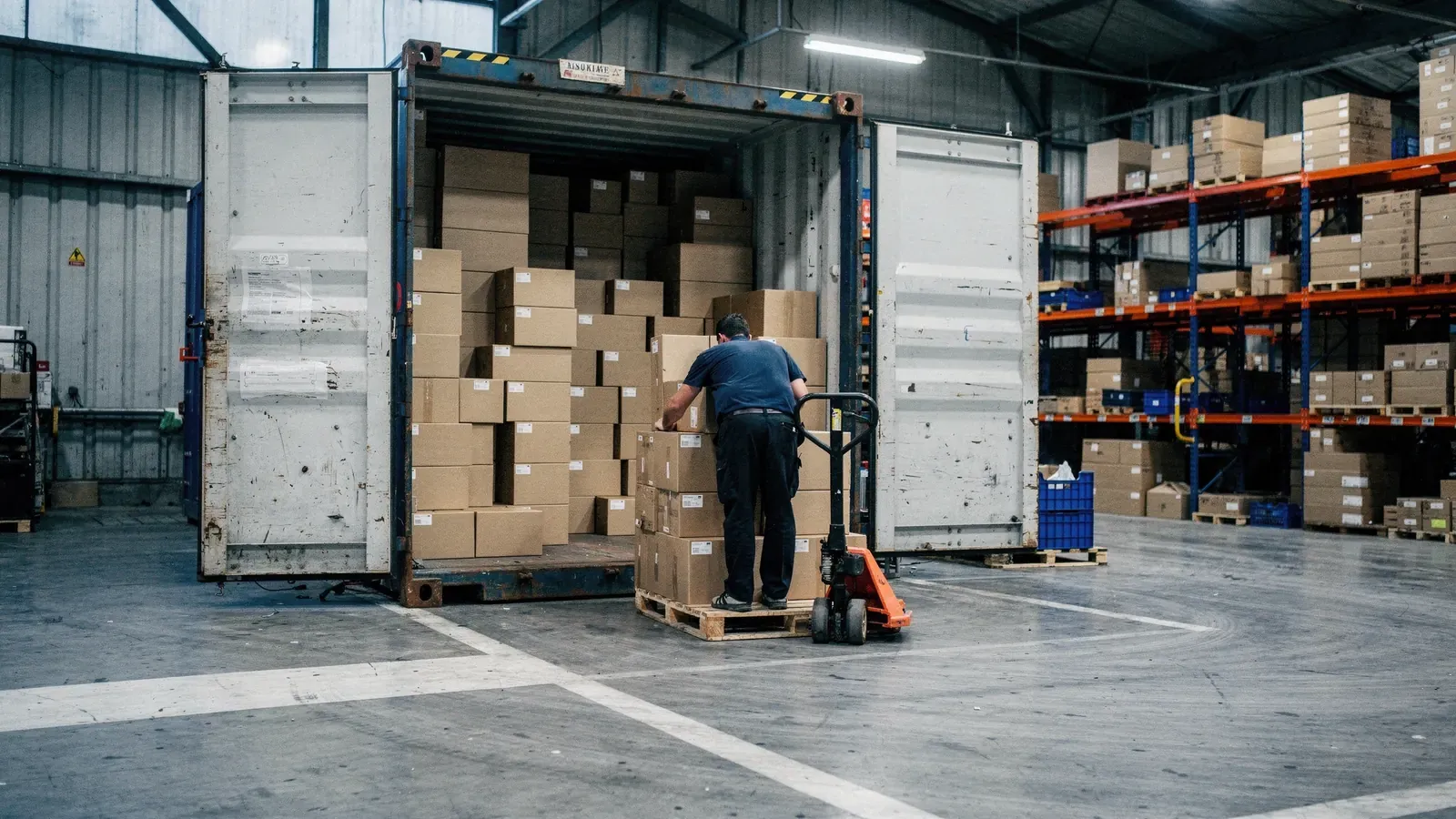
- You import stock into the EU (for example a container from Asia to a warehouse in Belgium, see importing from China), then sell from that stock to European customers. Import VAT is paid once, when the container is cleared, on the customs value of the goods. Subsequent sales from that stock then fall under the OSS if they are delivered to several EU countries — see our guide to the VAT One Stop Shop (OSS).
- You ship directly from a non-EU country to each end customer (dropshipping or individual consignments from a non-EU supplier). Each parcel is a separate import, with its own VAT due on entry into the EU.
Checking the value of the goods and the point of import
The applicable scheme depends on the intrinsic value of the goods (excluding transport and insurance costs, unless they are included in the price):
- Up to €150: the seller can opt for the IOSS (Import One Stop Shop). VAT is collected directly at the point of sale, at the rate of the destination country, and declared monthly under a single IOSS identification number. The parcel crosses the border with no VAT to be paid by the carrier or the customer on delivery.
- Above €150: the IOSS does not apply. VAT (and any customs duties) are paid at customs clearance, in the standard way.
Calculating VAT, customs duties and applicable costs
Import VAT is calculated on a base that includes the customs value of the goods, any customs duties due, and transport and insurance costs up to the first place of destination in the EU. The rate applied is the one in force in the country of import, or in the end customer’s country under the IOSS. An estimate made in advance, before shipping, saves the customer from discovering unexpected charges on delivery — one of the main reasons parcels are refused and sent back to customs.
Choosing between the OSS and IOSS schemes
The two schemes cover different situations and do not replace each other:
| Scheme | Applies to | Where and when VAT is due |
|---|---|---|
| OSS (Union scheme) | Intra-EU distance sales, goods already in the EU | At the point of sale, customer’s country rate, quarterly return |
| IOSS | Sales of goods imported from non-EU countries, value ≤ €150, shipped directly to the customer | At the point of sale, customer’s country rate, monthly return |
| Standard import | Goods imported from non-EU countries, value > €150, or no IOSS | At customs clearance (or deferred if authorised) |
Preparing returns and staying compliant
An online retailer that imports regularly should check three points with its accountant before each purchasing campaign: is import VAT deferral authorisation in place (it avoids paying VAT up front at customs); is the IOSS relevant for direct consignments under €150; and is the export by destination country needed for the OSS return available from the logistics system?
At Brain e-Log, the import and customs file (transport, customs clearance, import VAT and OSS) is handled by a single point of contact, from the port of departure to putaway in Houdeng-Goegnies. See also our guide to e-commerce customs clearance step by step.
See our import and customs service
In short
Since 2021, there is no such thing as a small parcel exempt from import VAT in the EU. The question is not how to avoid it, but how to choose the right scheme: the IOSS for direct consignments under €150, VAT deferral for stock imported upstream, and the OSS for the sales that follow from that stock.
Frequently asked questions about import VAT
01When did the VAT exemption on small parcels end?
On 1 July 2021. Before that date, consignments worth less than €22 were exempt from import VAT. This exemption was abolished: all goods imported into the EU are now subject to VAT, whatever their value.
02What does the €150 threshold change?
It determines which scheme applies, not whether VAT is exempt. Below €150, the seller can use the IOSS to collect VAT at the point of sale. Above it, VAT is paid on import in the usual way, often with customs duties on top.
03Who pays import VAT: the seller or the customer?
It depends on the scheme chosen. Without the IOSS, the end customer often pays it on delivery, plus any customs clearance fees charged by the carrier, which comes as an unpleasant surprise. With the IOSS, the seller collects it at the point of sale and the customer pays nothing more on receipt.
04Is import VAT deferral automatic?
No, it requires prior authorisation (the deferral scheme, often linked to an ET 14.000 licence in Belgium). Without this authorisation, VAT is paid to customs at the time of clearance.
05Does an online retailer storing stock in Belgium and selling across the EU fall under the IOSS?
No, not for those sales. The IOSS concerns goods imported from non-EU countries and shipped directly to the end customer. Stock already in Belgium and sold within the EU falls under the OSS for intra-EU distance sales, not the IOSS.