
Resources
17 September 2026 · 2 min read
Importing from China for e-commerce: what you need to know on the logistics side
When you import from China for e-commerce, finding a supplier is a job in its own right, the job of a sourcing agent. Once the goods are produced and ready to leave, a second project begins: transport, customs clearance, import VAT and warehouse receiving. This page covers that second part, the one that directly concerns your logistics.
What this page covers, and what it doesn’t
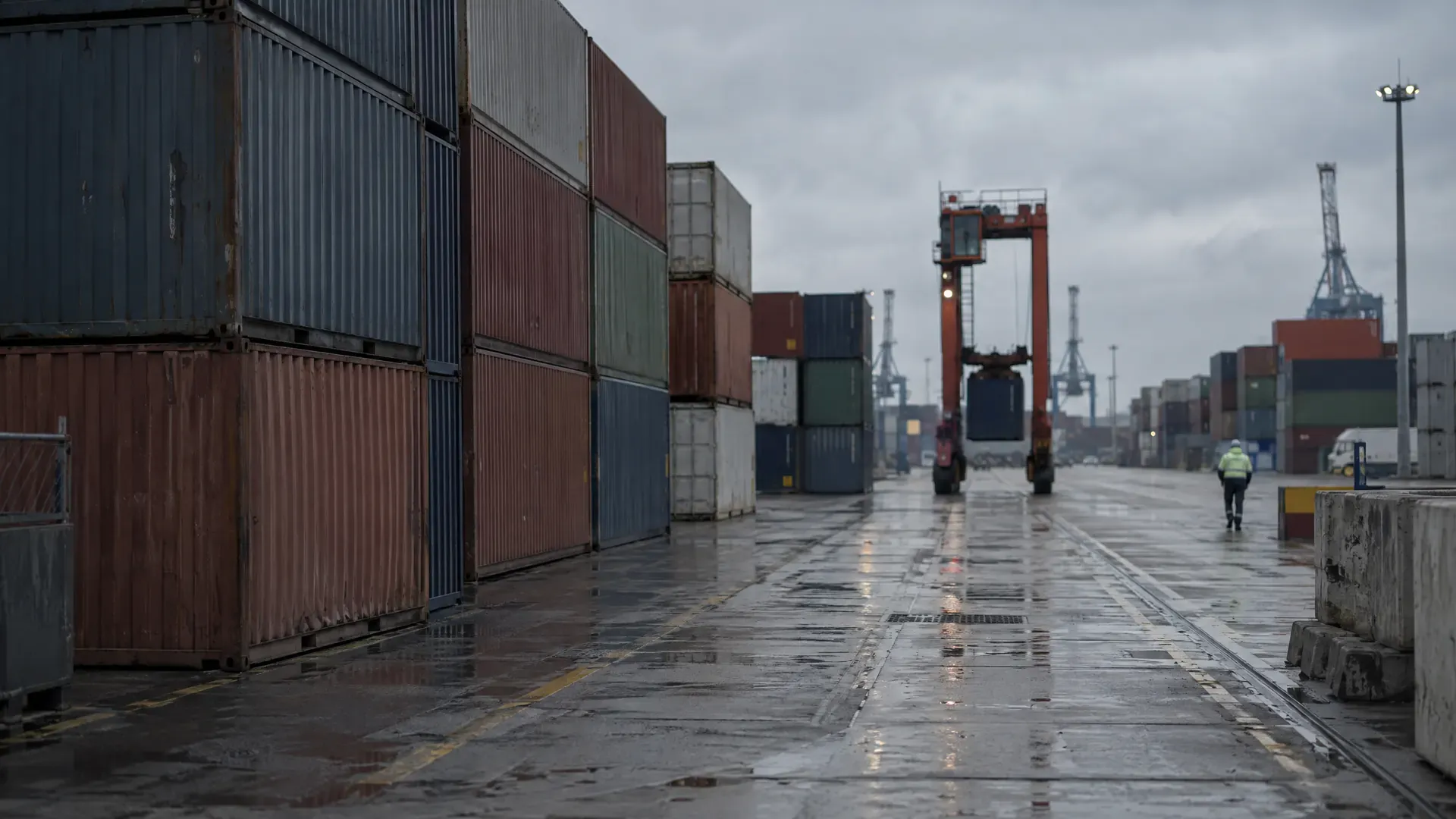
Importing from China for e-commerce combines two different jobs. The first, sourcing, means finding a reliable supplier, negotiating a price and a lead time, and checking production quality. That is the job of a specialist agent, not a logistics provider. The second, import logistics, begins once the goods are ready to leave China: transport, customs clearance, import VAT and warehouse receiving. This page covers that second project in detail.
Transport from China: sea or air, before customs clearance
Goods travel by sea (the most common, cheapest and slowest option) or by air (faster, considerably more expensive). The choice depends on urgency and on the product’s value: a large volume with a low unit value almost always goes by sea; an urgent launch or a high-value product can justify air freight, at least for a first batch of stock.
Customs clearance, a mandatory step
No goods from China enter the European Union without a customs declaration. The file brings together the commercial invoice, the packing list and, depending on the product, a certificate of origin or a certificate of conformity. A missing document when the container arrives holds up customs clearance and delays putting stock away. The steps are detailed on our page on e-commerce customs clearance step by step.
Import VAT and customs duties
Goods imported from China are subject to import VAT whatever their value since the exemption for low-value parcels was abolished in 2021, and potentially to customs duties depending on the product category. The rules, depending on value and the scheme chosen, are detailed on our page on import VAT for e-commerce in the EU.
What happens at warehouse receiving
Once cleared, the container is delivered to the warehouse for unloading, counting and putaway. Brain e-Log handles import and customs clearance from the port onwards: booking the unloading slot, a joint count on arrival, quality control, and putaway within 24 to 48 hours. The container goes straight from the freight forwarder to the receiving dock, with no extra intermediary for you to manage.
See our import and customs service
In short
Importing from China for e-commerce is about more than finding a supplier: transport, customs clearance, import VAT and warehouse receiving form a separate chain that starts at the port and ends with stock available for sale. A single point of contact across that chain reduces the risk of a missing document holding up a container at the quay.
Frequently asked questions about importing from China
01Does Brain e-Log help you find a supplier in China?
No, that is not what we do. Sourcing (finding a supplier, negotiating, factory quality control) is the job of a sourcing agent or a dedicated platform. Our role starts with transport and customs clearance, and runs through to putting stock away.
02Do you need an EORI number to import from China?
Yes, every importer in the European Union needs an EORI number to clear goods through customs. You apply for it once, free of charge, from the customs administration of the country where you are registered.
03Who pays import VAT on a container from China?
The importer, at customs clearance, unless a deferred payment mechanism applies. See the details on our page on import VAT for e-commerce in the EU.
04How long between leaving China and stock being available in Belgium?
Standard sea freight is counted in weeks, not days; air freight cuts this to a few days but costs considerably more. Once the file is complete, customs clearance rarely adds more than a few days if no document is missing.