
Resources
17 September 2026 · 3 min read
Comparing parcel carriers in Belgium: the criteria that matter
bpost, DPD, DHL, GLS, UPS, Mondial Relay: no carrier is the best on every criterion at once. The right choice depends on your destination, the delivery time you promise and your returns rate. Here is how to compare parcel carriers in Belgium, without a fixed price table that would be out of date the following month.
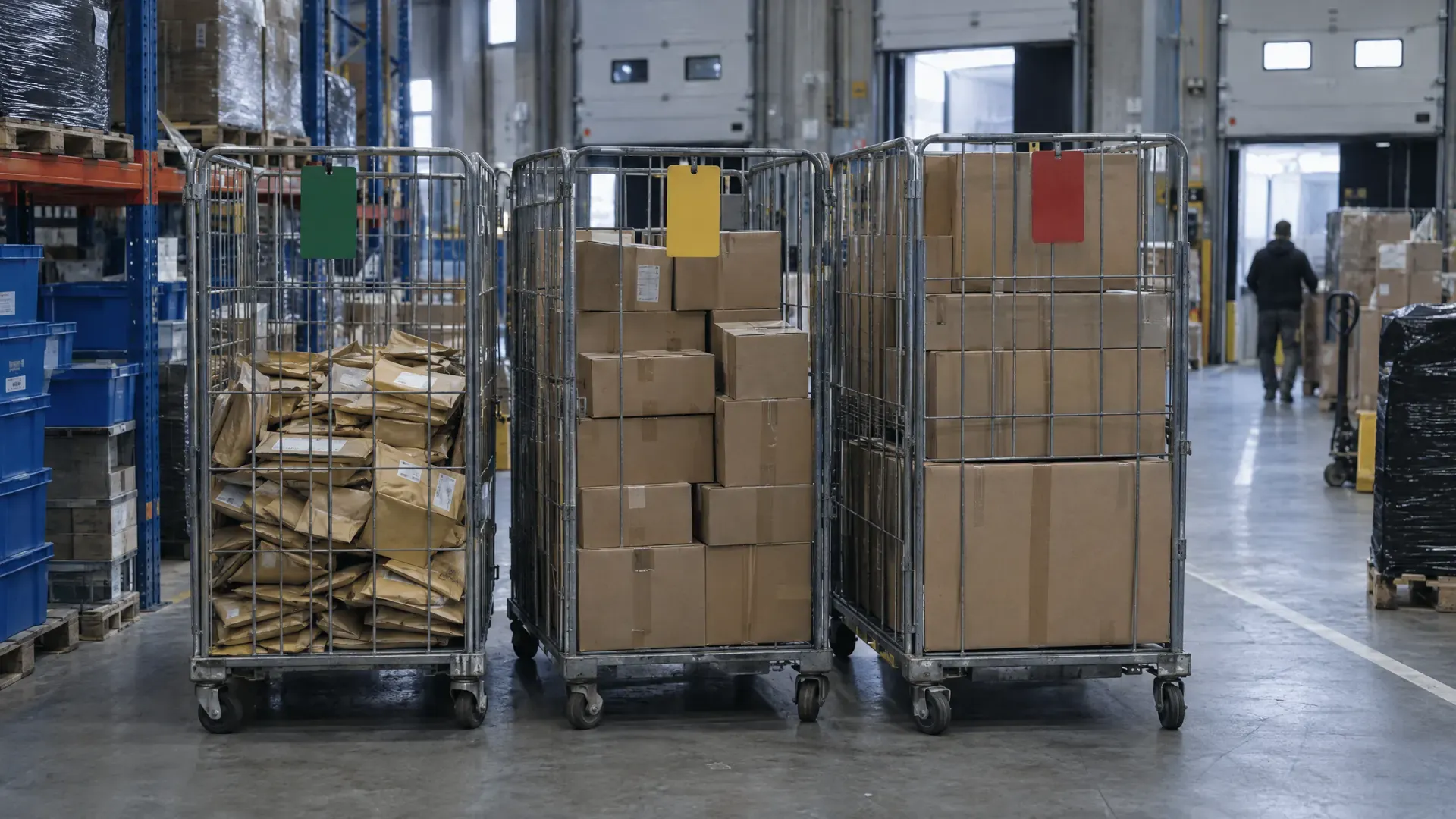
Five criteria for comparing parcel carriers
You don’t choose a carrier on a single figure. Five criteria determine whether it suits your online store.
Transit time. Delivery in 24 hours, 48 hours or longer, depending on the destination country and the service chosen (standard, express). The delivery time promised on your store must match the carrier’s actual transit time, not an optimistic estimate.
Delivery area. Not all carriers cover the same countries with the same quality of service. A network that is strong in Belgium and France may be less reliable for Eastern Europe or the French overseas territories.
Cost. The price depends on weight, format, zone and the annual volume you give the carrier. A public rate shown online is never the rate a volume shipper actually pays.
Tracking. A tracking number that works, statuses updated in real time, a notification to the customer: these are expected standards, not a premium service.
Returns handling. Prepaid returns label or not, time to restock, the network of drop-off points available to the customer: a criterion often underestimated at the initial selection.
Home, pick-up point, express: three types of service
Home delivery suits bulky parcels or customers who prefer not to travel. Generally more expensive than a pick-up point.
Pick-up points reduce the delivery cost and the failure rate (no time slot to keep), at the cost of a trip for the customer. Relevant for light parcels and dense urban areas.
Express guarantees a tight delivery time (often 24 hours), at a considerably higher cost. Reserved for urgent shipments or markets where delivery speed is a strong selling point.
Choosing between pick-up point and home delivery deserves its own decision: see pick-up point or home delivery.
Why a public rate tells you very little
The rates carriers publish are for occasional customers without a volume contract. An online retailer shipping several thousand parcels a month gets discounts that the public rate does not reflect. Volume is the main negotiating lever. Transport also accounts for a large share of the logistics cost of a parcel, line by line.
At Brain e-Log, e-commerce parcel shipping amounts to 130,000 parcels a month, handled by 14 carriers to 150 countries. This volume, pooled across several clients, allows us to negotiate rates a stand-alone online store cannot reach, without each retailer having to negotiate with each carrier themselves.
Multi-carrier: why it changes the game
Working with several carriers rather than one means each order can be automatically allocated to the best option based on destination, weight and the service required. A connected WMS makes this choice on the fly, with no manual intervention: a light parcel for Belgium goes to a pick-up point, a bulky parcel for Germany goes to home delivery, without you having to decide order by order.
What to remember before choosing
Don’t compare carriers on a single criterion. A low price with a high failure rate, or a short transit time without coverage of your priority zones, ends up costing more than it appears to save. The cost calculator factors transport costs into your overall estimate, line by line.
Frequently asked questions about choosing a carrier
01Should you work with one carrier or several?
Several, in most cases. A home delivery carrier for nearby Europe, a pick-up point network to cut the cost of small parcels, an express specialist for urgent shipments: the right mix depends on your spread of destinations.
02Is the lowest price always the best choice?
No. A low rate with a high failed-delivery rate ends up costing more: reshipping, customer service, negative reviews. The total cost includes the first-attempt delivery rate and the cost of handling disputes.
03How can a single online retailer negotiate bulk rates?
Generally, it can't: negotiated rates depend on the annual volume given to a carrier. A 3PL that pools the volume of several clients reaches rate tiers that a single online store does not.
04How does parcel tracking feed back into my online store?
The tracking number and delivery statuses come through automatically if your store is connected to the provider's WMS. Without a connection, tracking stays manual, entered carrier by carrier.